21/10/2026 06:16
Which Share Brought the Viewer? YouTube External Traffic for Cambodian Planter Shops

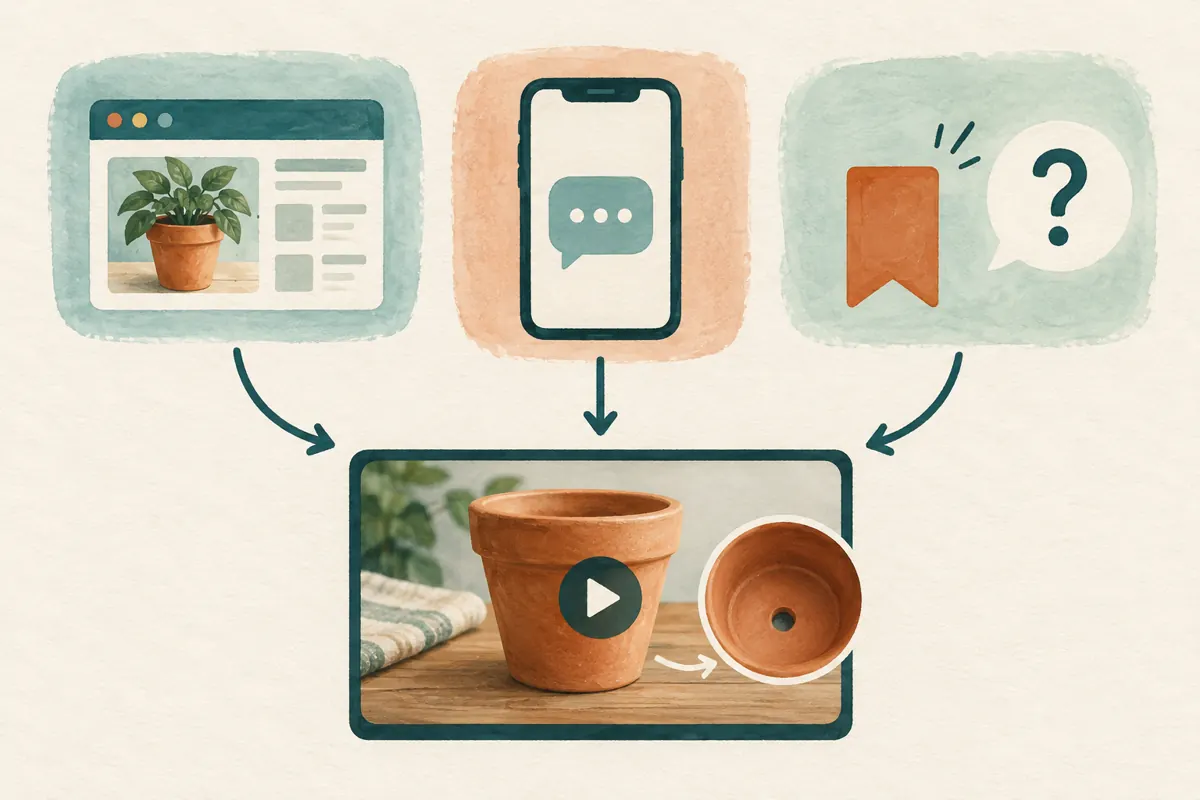
A planter demonstration can travel through a shop website, a community conversation and a customer's private message before someone asks about it. When viewing activity changes, the owner needs to decide where to spend the next hour of promotion. A total view count cannot settle that decision. This guide explains how Cambodian planter shops can combine YouTube discovery information with their own sharing records and customer questions. The aim is a useful next action: improve a placement, clarify the demonstration or investigate an unexplained change. The shop and campaign examples below are hypothetical, not customer results or performance promises.
Start with the decision the shop needs to make
Imagine a hypothetical Phnom Penh shop selling ceramic planters and matching saucers. Its video shows the drainage opening, the pot's interior and how the saucer sits underneath. Staff share the same demonstration from a product guide and in a gardening discussion where commercial posts are welcome. The business question is specific: which placement deserves another useful explanation next week?
Write that question before opening analytics. Otherwise, a prominent number can quietly become the campaign objective. Define a relevant enquiry as a question about an identifiable planter, such as its opening width, saucer availability or collection arrangements. General compliments can be welcome without qualifying as purchase enquiries. Keep room for educational value too: a demonstration may help an existing customer use a product correctly even when no new sale follows.
Find the discovery report for the exact demonstration
YouTube's official instructions direct desktop users to Studio, then Content, the selected video's Analytics and Reach. The discovery report separates traffic sources, while the external report identifies websites and apps associated with discovery. Some reports are unavailable on mobile. Use the official guide listed in the sources when checking the interface.
Before interpreting anything, confirm the video title, public link and selected dates. A channel-wide total may include unrelated demonstrations, making it unsuitable for deciding where this particular planter guide should be shared again. Record when you reviewed the information and retain the same date range when discussing it with a colleague. If a useful breakdown is missing, write that limitation into the review. Do not replace missing detail with a confident story about where the viewers must have come from.
Read source labels as routes, not customer identities
YouTube describes external sources as websites and apps linking to or embedding a video. Its direct or unknown category includes direct address entry, bookmarks, signed-out viewers and unidentified apps. Neither label establishes that a viewer lives in Cambodia, understands Khmer or intends to buy a planter.
For the hypothetical shop, an identifiable website source would support a narrow observation about a discovery route. It would not identify the exact person who later visited the counter. Equally, an unexplained increase should not automatically be assigned to the gardening discussion simply because staff remember sharing there. Preserve uncertainty explicitly. A useful note might say that sharing and viewing activity occurred during the same period, but the available evidence does not connect every view to that placement. This wording leaves the owner free to investigate without turning an assumption into a business fact.
Keep a placement log that analytics cannot write for you
Create one short record for each deliberate share. Include the demonstration link, placement address or internal reference, publication date, caption language, person responsible and intended audience. Note whether the placement contained a playable embed, a link or a separate teaser. These details describe your work; they do not assert that anyone watched.
Save the actual invitation beside the record. In a hypothetical example, the website might introduce the video as a drainage explanation, while a community post asks readers to check whether the saucer is included. Those messages set different expectations even though they lead to the same video. Recording them helps explain why subsequent questions differ. Keep private conversation contents out of a broadly shared marketing sheet. A brief, non-identifying summary is usually enough to document the purpose of a customer-facing share.
Compare placements without pretending to run a perfect experiment
Choose a manageable review period and avoid changing every part of the campaign simultaneously. For example, the hypothetical shop could keep the demonstration and product availability steady while improving only the website introduction. It could then review what happened before deciding whether to revise the community post. This creates a clearer learning opportunity than changing the title, offer, video and sharing locations together.
Still, ordinary shop promotion is not a controlled experiment. Previous links remain available, people forward messages, and customer needs change. A later period may include a different audience or a busier shopping week. Record these circumstances rather than calculating a supposed winner from timing alone. If the evidence is weak, choose a small, reversible next action. Improving an ambiguous caption may be justified by customer confusion even when the traffic report cannot prove which placement caused it.
Make the sharing invitation useful for Cambodian buyers
A person deciding whether to watch needs to know what the demonstration answers. Replace a vague invitation such as 'See our beautiful pots' with a precise explanation of the drainage opening and matching saucer. Use the language appropriate to the placement's readers. Where Khmer wording accompanies an English model name, check that both refer to the same item.
Keep practical local information close to the offer. State the collection area accurately, distinguish delivery availability from a confirmed delivery quote, and identify whether the saucer is included or separate. Do not imply that every item on the shelf matches the demonstration. For the hypothetical shop, a clearly stated model reference allows staff to connect a later question to the product shown. This is more useful than making the video appear popular while leaving viewers uncertain about what they can actually order.
Connect the review to enquiries without identifying viewers
Keep a separate enquiry record with the date, product reference, question category and next action. Useful categories might include dimensions, drainage, saucer compatibility, stock and collection. If a customer voluntarily explains where they found the demonstration, record that as their account of the journey. Do not treat it as a complete technical attribution record.
In a hypothetical case, someone says they received the video from a relative and asks whether a planter fits a narrow balcony ledge. The shop can answer the sizing question and note the reported referral. It cannot safely conclude that the person was a particular entry in the external traffic report. Review enquiry themes in aggregate. Repeated saucer questions suggest that the offer needs clearer wording; repeated dimension questions suggest showing the relevant measurement. Neither improvement requires identifying individual viewers or collecting unnecessary personal information.

Keep SMM service labels outside the attribution conclusion
The supplied bine.digital catalogue includes the exact public name 'YouTube - Auto Views [RAV-MTS™ - High Monetization Views] + Engagements'. Its wording presents a views-and-engagements offering, but the supplied description is empty. The title does not establish its delivery method, audience location, monetization effect or compliance. Treat those phrases as catalogue wording, not verified outcomes.
YouTube's fake engagement policy prohibits artificially increasing views and other engagement metrics. It also warns that a hired promoter's actions can affect the channel. That makes the delivery method a decision point before any purchase. Do not proceed with a service that artificially inflates metrics. Purchased engagement is not evidence of genuine interest, sales, ad delivery or Cambodian users. If panel activity already overlaps a review period, document the overlap without assigning unexplained traffic to the order or describing the resulting count as local demand.
Choose the next action from the strongest available evidence
Use a simple decision sequence. First, check whether the placement and destination explain the same product. If they do not, correct the mismatch. Next, inspect actual questions for a recurring information gap. If customers repeatedly misunderstand the saucer arrangement, improve that explanation before distributing the link more widely. Then consider whether the discovery information supports further attention to a particular placement.
When evidence remains limited, keep the next step small. The hypothetical shop might refresh an outdated website paragraph, answer a permitted community question or produce a clearer close-up for a future demonstration. Record the reason for that choice. A defensible reason could be that the placement serves the intended customer question and is easy to maintain. It need not claim that analytics proved a sales effect. Leave unexplained activity unresolved until better evidence appears.
Avoid review habits that create false certainty
Do not compare one video's lifetime activity with another video's recent promotion window. Do not interpret a missing app name as proof that nobody used that app. Do not classify all unknown traffic as suspicious, or all identifiable traffic as commercially valuable. A source label alone cannot settle either judgment.
Another mistake is repairing the report instead of the customer experience. Buying activity to make a quiet campaign look stronger undermines the very evidence the shop needs. So does rewriting the placement history after seeing the outcome. Keep original observations and add corrections visibly. Finish each review with three separate statements: what was observed, what remains uncertain and what staff will change next. Assign an owner and a review date to the action. That turns analytics into a working shop routine rather than a recurring argument about whose post deserves credit.

Frequently asked questions
Can I say that Telegram brought every view recorded after I shared the video there?
No. Timing provides context, but other discovery routes may still be active. Record the Telegram share and compare it with the available report without assigning the entire change to it. A customer saying they received the link through Telegram is useful additional information, but it still does not explain every view.
Does external traffic mean that people watched outside YouTube?
Not necessarily. YouTube's definition covers both links and embeds on external websites and apps. The category concerns how the content was found; it should not be rewritten as a claim that every viewer watched inside a particular website. Keep the original category wording in your review.
What if the demonstration gets questions but few people mention where they found it?
Use the questions to improve the offer anyway. Ask about discovery naturally when it helps, without making an answer a condition of service. A recurring question about planter width is actionable even when its referral source is unknown. Keep the missing attribution separate from the useful product insight.
Should a small shop stop sharing when the source breakdown is unclear?
Not automatically. Share where the guide answers a relevant question and where promotion is permitted. Keep the workload proportionate, maintain a placement log and review enquiries. Unclear attribution calls for modest conclusions, not necessarily inactivity. Pause or revise placements that create confusion, attract irrelevant requests or demand more staff time than the shop can support.
Can an SMM panel completion status prove that the campaign reached Cambodian buyers?
No. An order status describes the provider's order record. It does not independently establish viewer location, authentic interest or a purchase. Preserve any service record separately, examine the method against platform rules and base local customer conclusions on relevant business evidence. A larger engagement count does not resolve those questions.
Explore the current service catalogue, create an account, or ask a specific question through support tickets.
Prepared with AI assistance. Illustrations explain the workflow and do not represent customer results.