22/10/2026 04:07
Saved Sample or Current Stock? Telegram Saved Messages for Cambodian Upholstery Shops

A saved photograph of beautiful upholstery can be useful long after the fabric disappears from a supplier’s shelves. That becomes a problem when a Cambodian shop turns the photograph into a fresh promotion without checking what it actually represents. Was it a sample, a completed customer job or material available for immediate cutting? Telegram Saved Messages can help you collect references, but the business decision comes afterward. This workflow shows how to preserve useful context, check the current offer and prepare a public post that customers can act on. It also explains where an SMM panel request fits—and why additional engagement cannot verify stock or buying interest.
1. Decide what the saved picture is allowed to prove
Imagine a hypothetical upholstery workshop in Phnom Penh preparing a post about recovering dining chairs. The owner finds a saved photograph of a green fabric used on an earlier job. The photograph demonstrates a past finish. By itself, it does not establish that the same weave is available today, that the supplier still uses the same product code or that the workshop can complete another order within the old timeframe.
Before writing promotional copy, assign the reference one purpose: an example of workmanship, a material option awaiting confirmation or a verified current offer. These are editorial decisions you record yourself. A workmanship example can remain useful even when its fabric is discontinued, provided the caption makes that clear. A current offer needs a fresh check of the specific material and the workshop’s capacity. Choosing the purpose first prevents an attractive picture from silently becoming a stock promise.
2. Use Saved Messages to recover the source
Telegram describes Saved Messages as a place for notes, forwarded messages and references. Its View as Chats mode groups saved material by originating conversation. To switch views, open Saved Messages and use its title or menu to choose View as Chats or View as Messages. Telegram also documents a Saved tab within a conversation’s shared media and optional Premium tags for organizing saved items. These features are described in [Telegram’s Saved Messages guide](https://telegram.org/blog/new-saved-messages-and-9-more).
For the workshop, source grouping helps distinguish a supplier’s fabric photograph from its own finished-chair photograph. Start with one upcoming promotion and locate only the relevant references. Avoid reorganizing your entire history before doing useful work. Open the source conversation when available and read the surrounding discussion. A nearby message may explain that the pictured material was a sample, that another colour was substituted or that the quoted terms applied to a different job.
3. Add a short reference note while context is fresh
Write a compact companion note for each reference you expect to reuse. Include a distinctive reference code, the source, the material identifier, the photograph’s purpose and what remains unconfirmed. Use that same code in your draft so you can match the note and picture without relying on memory. The code is your own filing convention; it does not need to appear in the public post.
A hypothetical note might read: “Reference UP-GREEN-A. Supplier sample photograph. Green coarse weave. Product code needs confirmation. Public photo permission pending. Intended use: explain texture choices.” If staff normally work in Khmer, write the note in Khmer while retaining the supplier’s exact material code. Do not replace an identifier with a loose colour translation. Several fabrics can all be called green, while differing in texture, backing or intended use. Record uncertainties explicitly instead of leaving blank spaces that another person might interpret as approval.
4. Separate a visual reference from a material specification
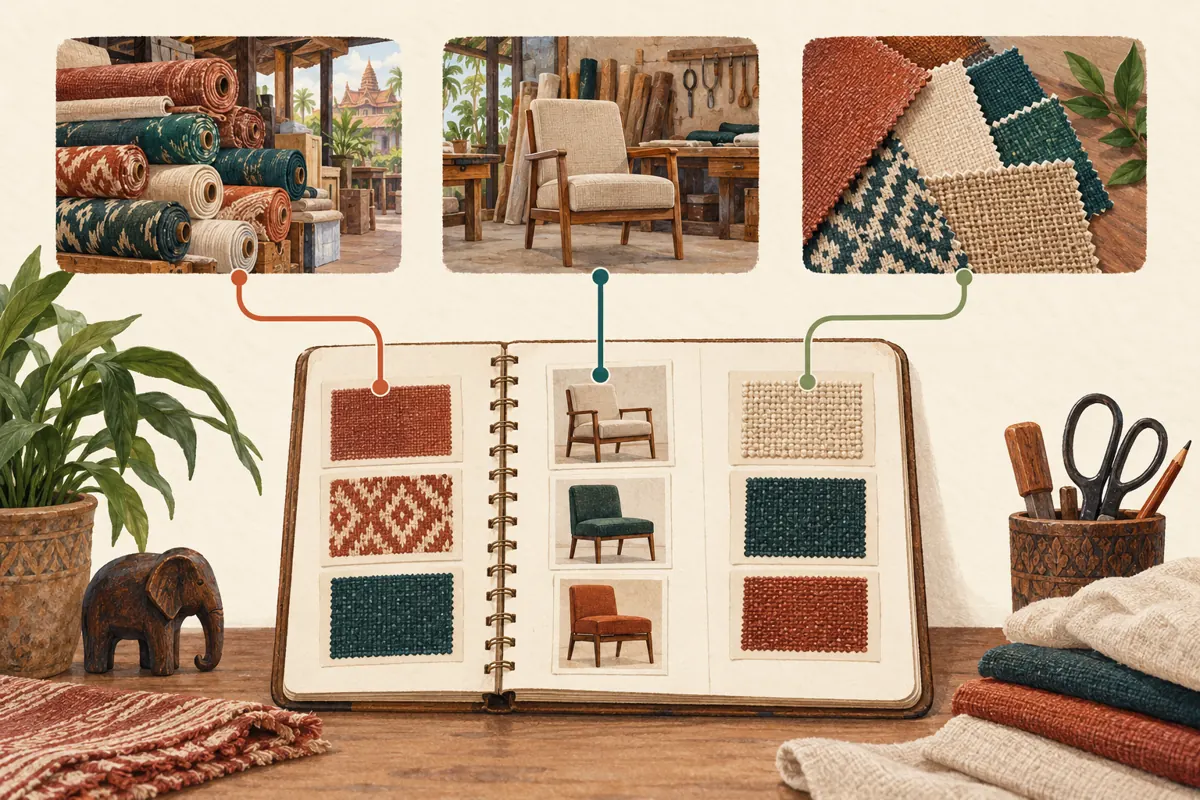
A photograph can help someone discuss appearance, but it is a weak basis for promising exact colour or suitability. Lighting, camera processing and the customer’s screen can change how a fabric looks. Before using a saved picture in an offer, compare its material identifier with the current sample or supplier confirmation. If the identifiers do not match, treat the image as inspiration until the difference is resolved.
For a hypothetical Siem Reap workshop, the practical question might be whether a saved woven fabric is suitable for the customer’s dining-chair seats. Ask the supplier for the relevant material details and explain what the workshop has actually checked. Avoid inventing claims such as stain-proof, waterproof or suitable for every household. If appearance matters to the purchase, offer a physical sample review where feasible. A small-screen photograph should support a conversation about the fabric, rather than settle every specification.
5. Recheck availability at the moment of promotion
Create a short verification routine before moving a reference into a promotional draft. Confirm the material code, the available colour, whether enough material can be obtained for the proposed work and any conditions affecting supply. Separately check workshop capacity. Fabric availability and an available production slot are different facts, and either can prevent the shop from accepting the job described in the post.
Record when the check occurred and who supplied the information. Do not invent a universal expiry period for every confirmation. A limited remnant may need another check immediately before accepting an order, while a general workmanship post may need no stock statement at all. If confirmation remains incomplete, change the offer to match the evidence: invite customers to discuss currently available alternatives. Do not advertise the saved fabric as ready merely because a supplier has not yet replied.
6. Build a public version with its own explanation
Treat the saved reference and the customer-facing post as separate pieces of work. The public version should explain what the image shows, what service the shop offers and what the customer should send next. For an upholstery enquiry, useful starting information might include a photograph of the furniture, the number of pieces and the preferred material style. Avoid requesting private household details in a public comment.
A hypothetical caption could say: “This earlier chair project shows a textured upholstery finish. Ask us about the fabrics currently available for your chairs. Send a furniture photo and the number of seats for an initial discussion; the final quote follows assessment.” That wording creates a clear next step without turning a past project into a current stock listing. If you instead promote a confirmed fabric, identify it accurately and state any meaningful conditions. Remove supplier-only prices, customer addresses and unrelated conversation details from the public assets.
7. Give the reviewer a complete handover
Your personal collection should not be the only place where another staff member can understand the proposed offer. Prepare an approved handover containing the selected image, the public caption, the relevant verification note and the intended destination. Share only the business information the reviewer needs through your agreed work process. There is no reason to give someone access to your account just to review a fabric promotion.
Ask the reviewer to answer concrete questions: Does this image show the material named in the caption? Is the post describing past work or current availability? Can the shop fulfil the stated next step? If the reviewer cannot answer, return the draft for clarification. Keep the final approval attached to the particular version being published. Approval of an earlier sample photo should not automatically cover a replacement image with a different fabric, finish or customer setting.

8. Evaluate panel services against the actual task
The supplied catalogue includes the exact public service name “Telegram Members ~ Max 1M ~ 50k/days ~ Instant ~ 𝐍𝐎 𝗥𝗘𝗙𝗜𝗟𝗟”. Its title identifies a Telegram member service, but no supporting description was supplied. Treat the quantity, timing and refill wording as catalogue labels requiring clarification, not verified outcomes. Nothing in the supplied description establishes Cambodian audience origin, upholstery interest or suitability for this workflow.
If your immediate objective is to help buyers understand fabric options, adding members does not resolve missing specifications or uncertain stock. Finish the offer and enquiry route first. If you still consider a panel service, review its current terms, required target and applicable platform rules before deciding. Do not send personal Saved Messages references as promotional destinations. Purchased engagement is not evidence of genuine interest, sales, ad delivery or Cambodian users, and should never be presented as customer endorsement.
9. Judge the post by the questions it resolves
After publication, review whether enquiries contain the information needed for a useful response. Are customers identifying the pictured fabric correctly? Do they understand that an older project is an example? Are they sending furniture photographs rather than asking whether the entire pictured chair is for sale? These observations reveal whether the public explanation is doing its job.
Keep a simple enquiry record that distinguishes a general question, an assessment request, a quote and a confirmed job. If a panel order exists, retain its delivery record separately. Do not attribute an enquiry to that order without evidence. A hypothetical pattern of repeated questions about whether foam replacement is included suggests a missing scope explanation, not a need for more engagement. Improve the caption or create a dedicated explanation of what the upholstery service includes before promoting the same ambiguous offer again.
10. Avoid the shortcuts that make saved material misleading
Common mistakes include copying an old price into a new caption, confusing two similar fabric codes and assuming that possession of a supplier photo includes permission to publish it. Another is saving only the attractive image while discarding the message that described its limitations. When important context is missing, seek confirmation or choose a reference whose meaning you can establish.
Close the workflow by noting what happened to each used reference: published as past work, verified for the current offer or held pending clarification. Keep useful historical material clearly identified as historical. When stock changes, review the public offer and any planned promotion that relies on it. The aim is a small, dependable collection that helps you make accurate decisions. A large archive has little promotional value if every photograph requires guesswork about what the shop can actually supply.

Frequently asked questions
Do I need Telegram Premium to use this workflow?
The workflow does not depend on optional tagging. Its essential work is collecting a reference, recording context and verifying the offer. Telegram’s cited guide identifies emoji-based Saved Messages tags as a Premium feature. You can use consistent written reference codes in your own notes without making tags a requirement.
Can I reuse a saved supplier photograph in my shop’s promotion?
Confirm permission for the intended public use and make sure the image accurately represents the offer. Saving a picture does not establish either point. If permission or material identity remains unclear, use an original photograph of a sample you can identify, or postpone the post until you have a suitable asset.
What if the fabric is discontinued but the completed work still looks good?
Use the image as an example of past workmanship if you have permission and the caption explains its status. Invite customers to discuss available alternatives. Avoid implying that the exact pictured fabric can be ordered. The post can demonstrate stitching or finishing without promising the same material.
Should a rise in channel members influence how much fabric I order?
A membership change alone is not a dependable stock-planning signal, particularly where purchased engagement is involved. Base purchasing decisions on verified enquiries, agreed specifications, confirmed jobs and your normal inventory process. Even an interested person may need a different fabric or may not proceed with a quote.
What is the smallest useful version for a busy owner?
Start with one image and one companion note. Identify its source, state what it can demonstrate and list what needs checking. Verify those points, write the public caption and obtain the necessary review. Expand the collection only when this routine makes the next promotion easier to prepare accurately.
Explore the current service catalogue, create an account, or ask a specific question through support tickets.
Prepared with AI assistance. Illustrations explain the workflow and do not represent customer results.