20/10/2026 16:11
Can That Extract Stand Alone? YouTube Clips for Cambodian Curtain Shops

A curtain demonstration can make perfect sense in full and become misleading when only its most satisfying moment is shared. A hook slides into place, but the explanation identifying the compatible rail is missing. For a Cambodian curtain shop answering enquiries between counter sales and installation visits, a short extract should reduce that confusion. This workflow explains how to select, review and share a YouTube Clip that answers one useful question while keeping its limitations visible. It also shows where an SMM-panel decision belongs: after checking the content and proposed promotion method, with no assumption that purchased engagement represents interested buyers.
1. Start with the question customers actually need answered
Choose a question narrow enough to answer with a visible comparison or action. For curtain hardware, that might be whether the demonstrated hook matches the sample carrier, where a removable piece sits, or which component the customer should photograph. Avoid trying to explain fabric selection, measurements, installation and delivery in the same extract. Write the question before watching for an attractive moment; otherwise, the most dramatic movement can become the selection criterion.
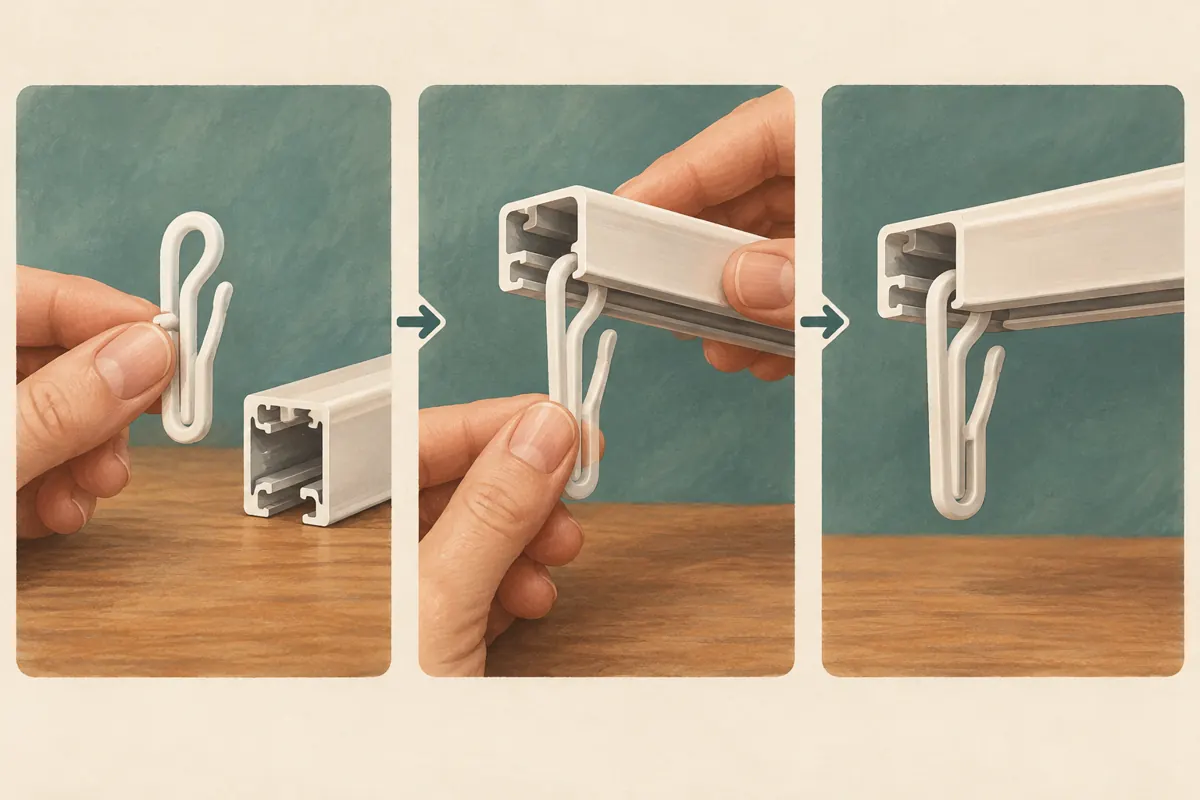
Consider a hypothetical Phnom Penh curtain shop receiving photos of several similar white plastic hooks. Its useful question is, “Which part should I show the shop before requesting a replacement?” A close view identifying the relevant pieces can help staff continue that conversation. A sweeping shot of finished curtains cannot answer it, even if it looks more polished. Define the intended next step as supplying the right information, rather than assuming the clip will produce an order.
2. Understand the format before selecting footage
YouTube Clips select 5–60 seconds from a source video and loop that selection. They are public to people who can access both the clip and the original. On desktop, sign in, open the video, choose More and Clip, enter a title, adjust the selection and use Share clip to copy its link. These mechanics are documented in [YouTube Help’s Clips guide](https://support.google.com/youtube/answer/10332730?co=GENIE.Platform%3DDesktop&hl=en).
For your editorial decision, treat the extract as an answer with boundaries. Write down the source video, the proposed beginning and ending, and the customer question it addresses. Keep the source link beside the clip link in your own working notes. Staff then have a route back to the broader explanation when a customer’s situation differs from the sample. If the available footage cannot support a clear short answer, share the full explanation or plan a separate recording.
3. Select the condition, action and result together
Review a candidate passage in three parts. The condition identifies the sample or circumstance: which hook, carrier or fabric heading is being discussed. The action shows the relevant comparison or movement. The result establishes what the viewer can reasonably conclude. Keep all three where the meaning depends on them. An extract that shows only the result can accidentally turn a demonstration of one compatible combination into an apparent promise about every similar product.
In the hypothetical shop’s recording, the presenter first identifies a sample carrier, shows the matching hook, and then explains which close-up photo would help staff check another item. That is a useful candidate. Starting after the sample identification would weaken it. Ending before the photo instruction would remove the next step. Listen for unfinished references such as “this one” or “the other type”: their meaning may depend on footage outside the proposed selection.
4. Reject extracts that cannot carry their own caveat
Use a simple decision process. If the relevant product and qualification both fit comfortably into the passage, proceed to review. If moving the boundaries restores the missing explanation, revise the selection. If the qualification lives much earlier in the recording, choose another passage or create a new demonstration. Do not compress the meaning merely to make the extract feel brisk. A slightly less exciting passage may answer the question more responsibly.
For example, a statement that a sample fits one particular carrier should not become a general compatibility claim when shared. Similarly, a tabletop demonstration does not establish that a customer’s installed rail is undamaged or suitable for the same part. The shop can explain those limits without turning every post into a disclaimer. Keep the relevant condition beside the relevant action, and ask for a product photo when the evidence needed to identify the customer’s item is absent.
5. Name the answer without enlarging the promise
Give the extract a title that identifies its actual purpose. In the hypothetical example, “Which curtain-hook photo helps us check the part?” is more accurate than “The hook that fits every curtain.” The first describes an information task the passage can support. The second promises compatibility that the footage has not established. Avoid adding claims about stock, price or installation speed unless those details are confirmed and appropriate to the material being shared.
Prepare accompanying copy in the language used in that customer conversation. For Khmer-speaking customers, have a fluent colleague check the product terms and the requested action. Where a supplier code is necessary, preserve it exactly alongside a familiar description. A useful message tells the reader what the extract answers and what to send next. It should not require them to understand internal stock abbreviations or infer whether the shop is offering a part, an inspection or a complete installation.
6. Run a fresh-viewer test on a phone
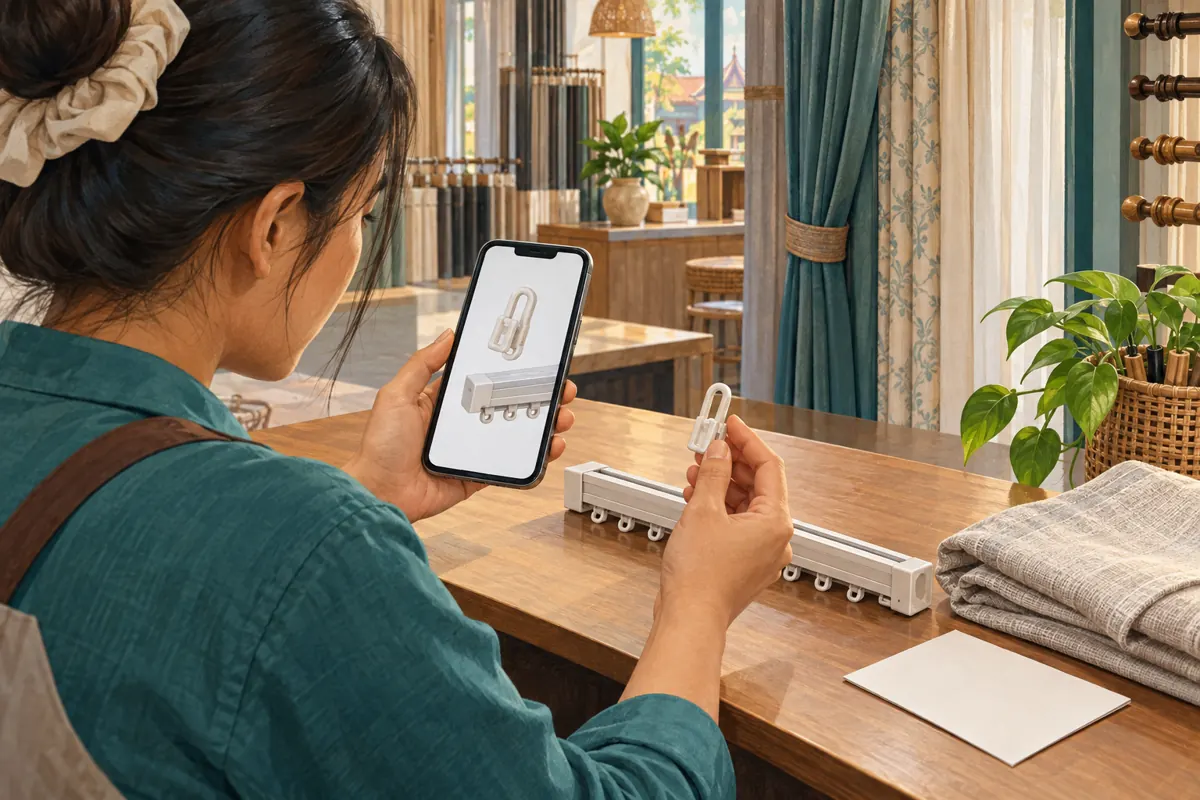
Ask a colleague who did not choose the passage to watch it without your explanation. Then ask them to identify the item, describe the conclusion and state the next step. These questions test understanding more effectively than asking whether the clip looks good. If the reviewer assumes that every similar hook fits, the selection or wording still needs work. Record the misunderstanding before changing anything so the revision addresses the actual problem.
Check the passage with sound, then inspect what remains understandable without it. Small white components can disappear against a pale background, and a hand can cover the distinguishing feature at the critical moment. If these problems are present in the original footage, a different extract may not solve them. Plan a clearer close-up instead. For a Cambodian shop serving customers on phones, visible part identification matters more than decorative transitions or an elaborate introduction.
7. Share the answer where the question already exists
Begin with relevant conversations and the shop’s own appropriate social posts. In a reply about replacement hardware, introduce the extract with a sentence explaining its purpose. Ask for a clear photo of the customer’s part through the shop’s established contact route. Avoid scattering the same link into unrelated discussions. The useful connection is between a specific question and a specific explanation, not between a large number of placements and an assumed sales outcome.
Set a practical response routine before wider sharing. Decide who checks incoming photos, who can confirm compatibility, and who handles uncertain cases. In the hypothetical shop, the counter assistant might collect the photos while the person responsible for hardware checks makes the identification. The clip should help that handoff by improving the information received. It should not encourage the assistant to promise a fit simply because the customer’s item resembles the sample on screen.
8. Make the SMM-panel decision a method check
A relevant catalogue example is “YouTube Like ~ Max 100k ~ 50k/days ~ Instant ~ 𝐍𝐎 𝗥𝗘𝗙𝗜𝗟𝗟”. Its title labels a YouTube-like service, but the supplied listing has no description. The wording does not independently verify delivery conditions, compatibility with clip links, audience location or business value. Do not infer that the service reaches Cambodian curtain buyers, and do not interpret the quantities or speed wording as a verified forecast.
YouTube prohibits artificially increasing engagement metrics and warns that a hired promoter’s actions can affect the channel. Reject a proposed method that relies on artificial engagement; outsourcing does not remove that responsibility. See [YouTube’s fake engagement policy](https://support.google.com/youtube/answer/3399767?hl=en-419). Purchased engagement is not evidence of genuine interest, sales, ad delivery or Cambodian users. For this workflow, useful promotion work includes improving the demonstration and sharing it with relevant audiences. An SMM catalogue entry is neither platform approval nor evidence that an unsuitable method becomes acceptable.
9. Review understanding separately from administrative records
Evaluate the clip against the task you chose. Are enquiries now accompanied by a usable close-up? Do customers identify which component they mean? Are staff still repeating the explanation that the extract was intended to provide? Keep brief, anonymised notes about these questions. They reveal where the communication needs improvement without turning a few conversations into a claim about overall campaign performance.
Maintain separate records for content revisions, any service administration and actual customer outcomes. An order status establishes an administrative event; a confirmed purchase establishes a different event. Neither tells you automatically why a person contacted the shop. In a hypothetical review, staff might notice that customers send clearer photos but still misunderstand the difference between a hook and a carrier. That suggests a terminology revision. It does not justify claiming a sales increase or attributing every subsequent enquiry to the clip.
10. Prevent stale extracts and recurring mistakes
YouTube states that clips are removed when the source video is deleted or made private. Include shared extracts in your review before changing a source video’s availability; the dependency is explained in its [Clips guide](https://support.google.com/youtube/answer/10332730?co=GENIE.Platform%3DDesktop&hl=en). Keep a short list of where your team used each link so that customer reply templates and planned posts can be checked when the underlying explanation changes.
Common editorial mistakes include cutting away the model identification, choosing a title broader than the demonstration, and sharing a technically clear passage with no useful next step. Another is keeping an old extract because staff already know its link, even though the product range has changed. Assign someone to review those references when samples or stock identifiers change. Where an explanation is no longer suitable, prepare the corrected answer and update the places the shop controls. Make maintenance part of the product-information routine.
Frequently asked questions
What should we do if the Clip option is not available?
Do not make the promotion depend on that control. Share the full video with a clear description of the relevant explanation, or prepare a separate recording that answers the question. Check YouTube’s current guidance for your device and video before promising staff a particular workflow. Keep the customer’s information need as the priority.
Can accompanying text repair a misleading extract?
It can add context, but it is a weak repair when the footage itself appears to promise something broader. A recipient may focus on the demonstration and miss the accompanying message. Reselect the passage so the essential condition remains visible or audible. Use the message for the next step and supporting detail.
Should the shop make a clip for every hardware model?
Start with recurring questions that are difficult to answer through a photo or short written reply. Several models may need different explanations, but a large collection creates maintenance work. Group genuinely equivalent questions only after the person responsible for product identification confirms that the explanation applies. Similar appearance alone is insufficient.
Can a rise in likes show that Cambodian buyers understood the demonstration?
No. A like total does not establish location, comprehension, compatibility or purchase intent. Assess understanding through the information people voluntarily provide in relevant enquiries, while acknowledging that these conversations are only a limited sample. Keep any purchased engagement out of claims about genuine customer demand or the effectiveness of the explanation.
When is a new recording better than clipping an existing video?
Record again when the important part is obscured, the qualification is separated from the action, or the original explanation uses outdated product information. A simple tabletop recording with clear sample identification can be more useful than extracting an attractive but incomplete moment. Plan the question, evidence and next step before filming.
Explore the current service catalogue, create an account, or ask a specific question through support tickets.
Prepared with AI assistance. Illustrations explain the workflow and do not represent customer results.