22/10/2026 06:39
One Packing Job or Several? Telegram Multiple-Answer Polls for Cambodian Supply Shops

A customer who seals cartons may also close paper bags and remove labels from reusable containers. Asking that customer to choose only one packing problem can hide useful information. For Cambodian packing-supply shops, a carefully designed Telegram multiple-answer poll can help decide which demonstrations to prepare next. The useful outcome is a clearer content plan, followed by relevant conversations about materials and applications. This workflow explains how to ask a focused question, test the choices, interpret overlapping answers, and keep any SMM-panel activity separate from evidence of customer demand. All shop scenarios below are hypothetical.
1. Decide what the poll should change
Start with a decision the shop can actually make. A useful question is which packing demonstrations to film during the next content session. A much weaker question is which products people like, because liking a product does not explain what information they need. Write the intended decision in your planning notes before drafting the poll: choose practical subjects for short demonstrations using materials the shop can show accurately.
In a hypothetical Phnom Penh supply shop, staff repeatedly explain carton sealing, paper-bag closure, and label removal. They want to discover which explanations subscribers would find useful. That is a manageable editorial task. The poll cannot establish how many rolls to purchase from a wholesaler, which customers will pay, or whether a particular adhesive suits an unseen surface. Those decisions require different evidence. Keeping the purpose narrow also makes the eventual follow-up easier to deliver.
2. Choose multiple answers only when needs can overlap
Telegram’s official Polls 2.0 announcement documents polls that allow participants to select several answers. This fits a question about several jobs the same person performs. It is less suitable when the shop needs one first priority. Decide whether you want a list of relevant subjects or a single preferred subject before choosing the setting.
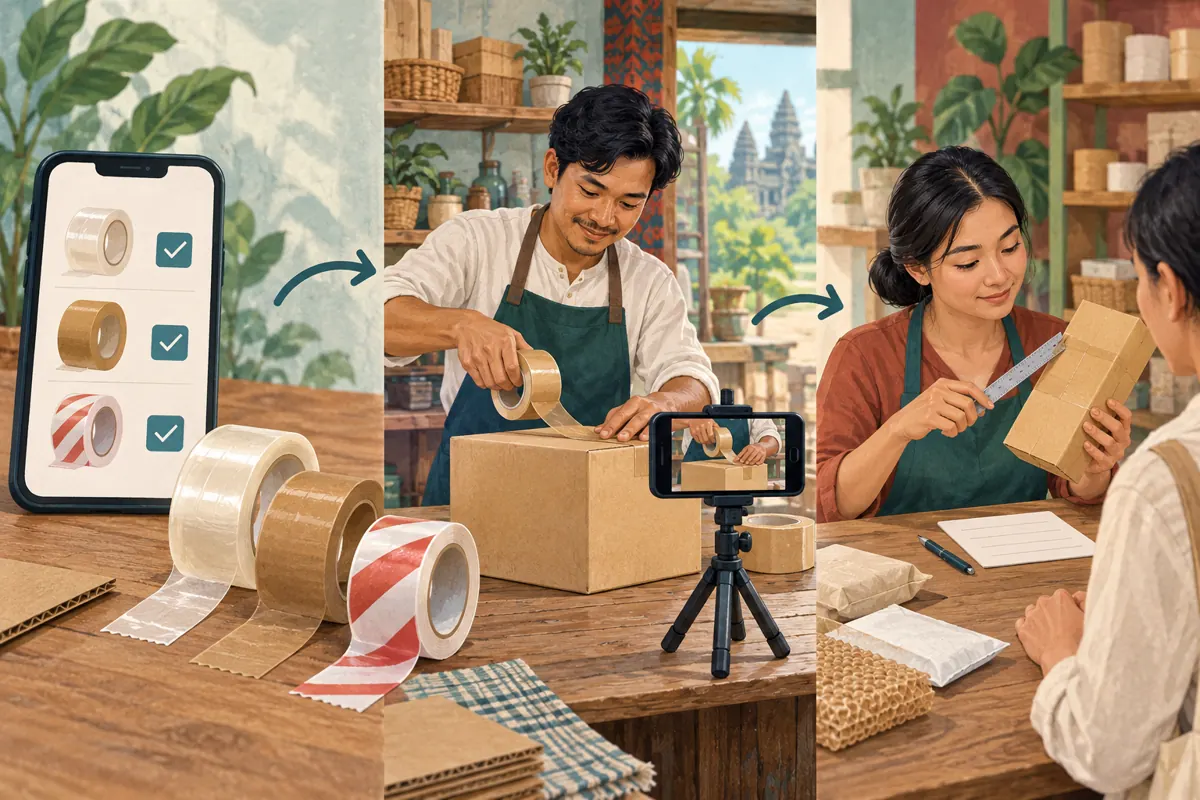
For the hypothetical shop, ask: “Which packing tasks would you like us to demonstrate? Select every task that applies.” Appropriate choices might be sealing a cardboard carton, closing a paper shopping bag, and removing a label from a reusable container. These are separate activities that one respondent could reasonably select together. If the actual decision is which demonstration to publish first, ask a separate single-choice question later. Do not silently reinterpret a multiple-answer poll as a ranking: selecting several options does not reveal their order of importance.
3. Write choices at the same level of detail
Every answer should describe a comparable task. Avoid mixing a broad category such as packaging with a narrow action such as cutting tape neatly. The broad choice can absorb several different needs, making the results difficult to interpret. Product colours, pack quantities, delivery arrangements, and application problems also belong to different questions. Combining them may produce activity without a useful filming brief.
Keep each choice short enough to understand on a phone, but include the object being handled. “Closing bags” is less clear than “Closing paper shopping bags.” For customers who mainly read Khmer, prepare the actual public question and choices in natural Khmer and have a fluent colleague check the distinctions. Retain familiar product names only where they help identification. This English planning guide does not mean the shop should change the language of its channel. Use customers’ ordinary task vocabulary instead of supplier jargon.
4. Configure and test a draft before inviting responses
Telegram’s official instructions describe creating a poll through the attachment menu, entering the question and options, and choosing the relevant settings. Select multiple answers for this workflow and review the voting-visibility setting before sending. Telegram’s March 2026 update also documents descriptions, suggested options, time limits, and hidden results until the time expires. These are optional controls; a simple question does not need every available feature.
Test the draft in a staff space using the app your team normally uses. Ask a colleague to select two relevant tasks and explain what each choice means. Check the wording on a small screen. Decide whether allowing suggested options would help discover missing tasks or make a tightly scoped filming plan harder to manage. If an option needs correction after public responses have started, record the problem and issue a clearly explained replacement when necessary. Do not combine answers to differently worded questions as though they were identical.

5. Give people a reason to answer
Publish a short introduction explaining what the shop will do with the feedback. A hypothetical introduction could say that staff are preparing practical packing demonstrations and want to know which tasks need clearer explanations. State that selecting an option does not place an order or reserve stock. This prevents a content-planning exercise from resembling an unfinished sales form.
Choose a reasonable review date based on when someone can assess the responses and prepare the demonstrations. Tell readers when to expect an update without promising that every requested subject will be filmed. Share the question where interested customers already expect your shop’s content. Avoid sending unsolicited invitations to strangers; Telegram’s Channels FAQ explicitly cautions against unsolicited channel links and messages. A useful introduction, suitable audience, and clear follow-up are more valuable than repeatedly demanding votes from people who have no relevant packing task.
6. Read overlapping selections without inventing demand
Several selections can come from one participant. Therefore, adding the selections across all options does not give you a count of distinct customers. It also does not establish that respondents operate separate businesses. Record the question, options, settings, review date, and displayed results together so that another staff member can understand what was actually measured.
Interpret each choice as an expressed preference within this particular poll. Someone requesting a carton-sealing demonstration might already own suitable tape, be helping another person, or simply want to learn. Similarly, few selections for label removal do not prove that nobody needs it. The wording, timing, existing audience, and willingness to participate all affect what the shop sees. Describe the finding narrowly: respondents selected particular demonstration subjects. Avoid claims about Cambodian market demand, buying intent, or product superiority that the poll was never designed to establish.
7. Turn the results into a practical demonstration brief
Use the responses alongside staff knowledge of recurring questions. In a hypothetical example, carton sealing is a frequently selected subject, while counter staff also report confusion about where the tape should run. The resulting filming brief can show the carton, identify the tape used, demonstrate the placement, and explain the conditions shown. The editorial decision comes from combining feedback with a specific information gap.
Keep the demonstration honest about its scope. Show the actual material and surface used rather than implying that the same method works for every package. If the shop cannot answer a requested application question confidently, gather the necessary product information before filming. End the post with a useful next step: invite readers to describe their packaging material and task if they need help choosing. Ask them to keep addresses and private order information out of public responses. A useful demonstration should reduce ambiguity even when it produces no sale.

8. Keep SMM-panel services outside the feedback evidence
The supplied bine.digital catalogue includes the exact public service name “Telegram Post Views ~ From Real Account.” Its category identifies it as a post-view listing, but the supplied description is empty. The wording “From Real Account” is part of the listing name; the brief provides no supporting explanation that verifies account authenticity, audience location, purchase interest, or delivery method. Do not treat the title as independent proof of those properties.
No poll-voting service is established by the supplied examples. A post-view listing should not be treated as a way to obtain meaningful poll responses or validate the poll’s conclusions. If the aim is customer research, skip a service that does not answer that need. If you separately review a service for an explanatory post, check its current documented scope and applicable platform rules first. Keep any delivery record separate from the feedback log. Purchased engagement is not evidence of genuine interest, sales, advertising delivery, or Cambodian users.
9. Avoid the mistakes that make a poll misleading
Leading wording is a common problem. Asking whether readers want a demonstration of the shop’s “best tape” builds an unsupported claim into the question. Ask about the task instead. Another mistake is offering overlapping choices such as packing parcels and sealing cartons without explaining the difference. A respondent may select both for the same need, leaving staff unsure what to film.
Do not reward only answers that favour a product the shop wants to promote, or present a selected option as a customer endorsement. Avoid using channel views as a precise denominator for participation: Telegram explains that channel view counts are approximate and include views of forwarded copies. They are not a clean list of unique eligible respondents. Finally, do not keep reposting an unclear poll to seek a more convenient result. Fix the question, explain the change, and preserve the earlier record separately.
10. Close the loop with content and separate enquiry handling
Publish a brief follow-up explaining which demonstration you will prepare and why. Refer to the respondents without implying that they represent every customer in Cambodia. If practical constraints influence the choice, say so. For example, the hypothetical shop might film carton sealing first because it can show the requested method clearly with available materials, while reserving label-removal questions for a later review.
After publishing, record whether subsequent enquiries become more specific: do people now identify their carton surface, bag material, or intended use? Keep these observations as qualitative notes unless you have a consistent measurement process. Track actual quotations and confirmed orders through the shop’s normal sales records. A vote, a content view, an enquiry, and an accepted order are different events. Maintaining those distinctions lets a small team improve its promotion without turning ordinary platform activity into unsupported business claims.
Frequently asked questions
Should the poll ask about products or packing tasks?
For planning demonstrations, tasks usually provide a clearer starting point. A customer may not know which tape or adhesive is appropriate but can describe the object they need to close. Product comparisons can follow once the shop understands the application. Avoid asking readers to diagnose a materials problem through a popularity vote.
What if readers select almost every option?
That can indicate broad interest, but it can also mean the choices are too general. Review the wording before drawing conclusions. Use practical constraints and recurring customer questions to choose a manageable subject, then ask a narrower single-choice question if you genuinely need a first priority.
Can an anonymous poll supply customer leads?
Do not design the workflow around identifying anonymous respondents. Offer a separate, voluntary route for people who want advice or a quotation. Ask only for the application details needed to respond, and explain what happens next. A poll response alone should never become a booking or a presumed sales enquiry.
Should we cancel the idea if very few people respond?
Not automatically. Check whether the question was understandable and relevant to the audience. A small response can still suggest a useful explanation, especially when it matches questions heard at the counter. Describe it as limited feedback, and avoid presenting it as representative research or increasing service spending to make the poll appear persuasive.
Can a post-view service show whether the demonstration worked?
A service delivery record cannot establish that viewers understood the explanation or became customers. Assess usefulness through relevant follow-up questions, voluntary feedback, and separately verified enquiries. The supplied service description does not substantiate audience identity or business outcomes, so its listing name should not become evidence in a promotional claim.
Explore the current service catalogue, create an account, or ask a specific question through support tickets.
- Telegram: Polls 2.0 — Visible Votes, Multiple Answers, and Quiz Mode
- Telegram: AI Editor, Mighty Polls, Live Photos, Bots Managed by Bots, and More
- Telegram Channels FAQ
Prepared with AI assistance. Illustrations explain the workflow and do not represent customer results.