22/10/2026 18:44
Ask the Channel or Message the Owner? Telegram Enquiries for Cambodian Lampshade Shops
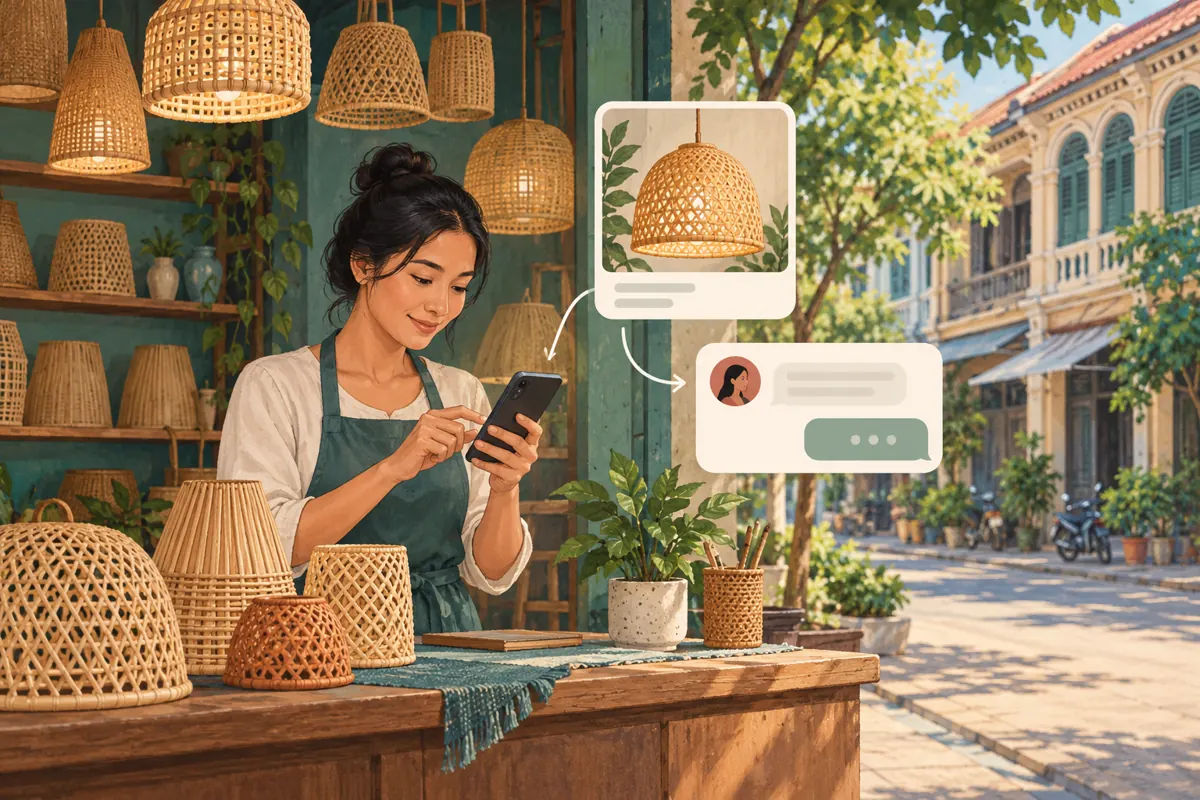
A lampshade photograph can attract attention without giving a buyer enough information to choose. Someone may want the same weave in a narrower shape, need several matching pieces or wonder whether the pictured fitting is included. For a Cambodian shop promoting its collection through Telegram, the next step should be easy to understand: where should that person ask? Channel direct messages offer one route. This guide explains how to prepare that route, handle enquiries consistently and evaluate promotion without confusing member counts with customer demand. The shop scenarios below are hypothetical illustrations, not customer results.
1. Give the promotion one clear next step
Start with the question your post is likely to create. A decorative room photograph might prompt questions about colour and availability; a close-up of a mounting opening might prompt a compatibility question. Write the invitation around that need. For example: “Ask about this shade by messaging the channel. Include the product reference and the quantity you need.” This is more useful than a vague invitation to contact the shop.
In a hypothetical Phnom Penh lampshade business, the owner currently puts a personal username beneath every collection post. A colleague helps answer enquiries, but buyers keep contacting the owner directly. Moving the advertised enquiry route to the channel can make the shop identity clearer. Before changing the invitation, agree who will monitor it and what information they can confirm. An additional inbox helps only when someone takes responsibility for its contents.
2. Enable direct messages and check the visitor experience
Telegram’s official announcement explains that channel direct messages let subscribers privately contact owners and admins, with incoming conversations separated from the owner’s personal chats. It gives the setup route as Channel Settings > Direct Messages and tells visitors to use the message bubble in the channel’s bottom bar. Owners can also set a fee per message. These feature details are documented in Telegram’s Direct Messages for Channels announcement.
For an ordinary product enquiry workflow, consider leaving messaging free so a shopper can ask for clarification without an additional payment decision. Check the actual setting before advertising the route. Then ask a colleague using their own regular account to find the channel, locate the message control and send a harmless sample enquiry. Verify that the responsible staff member receives it and can reply. Interface wording may differ across devices, so write customer instructions around the visible action rather than an elaborate sequence of taps.
3. Keep the public post useful before asking for a message
Private enquiries should resolve individual needs, not compensate for an empty product description. Put the shade reference, material, available dimensions and what is included into the public post when those facts are confirmed. Specify whether the photograph shows the shade alone or an assembled display. If the displayed colour depends strongly on the lighting, say so instead of implying that every room will look identical.
A hypothetical Siem Reap shop could label a sample “Woven shade L-04” and explain that buyers should ask about current availability before arranging collection. The same reference should appear beside the relevant photograph and in staff records. Avoid assigning one code to several visibly different designs. When a customer messages “the round one,” a stable reference gives the responder a simple clarification to request. It also helps when someone sees an older promotion and assumes the pictured item is still available.
4. Ask for a small, practical enquiry bundle
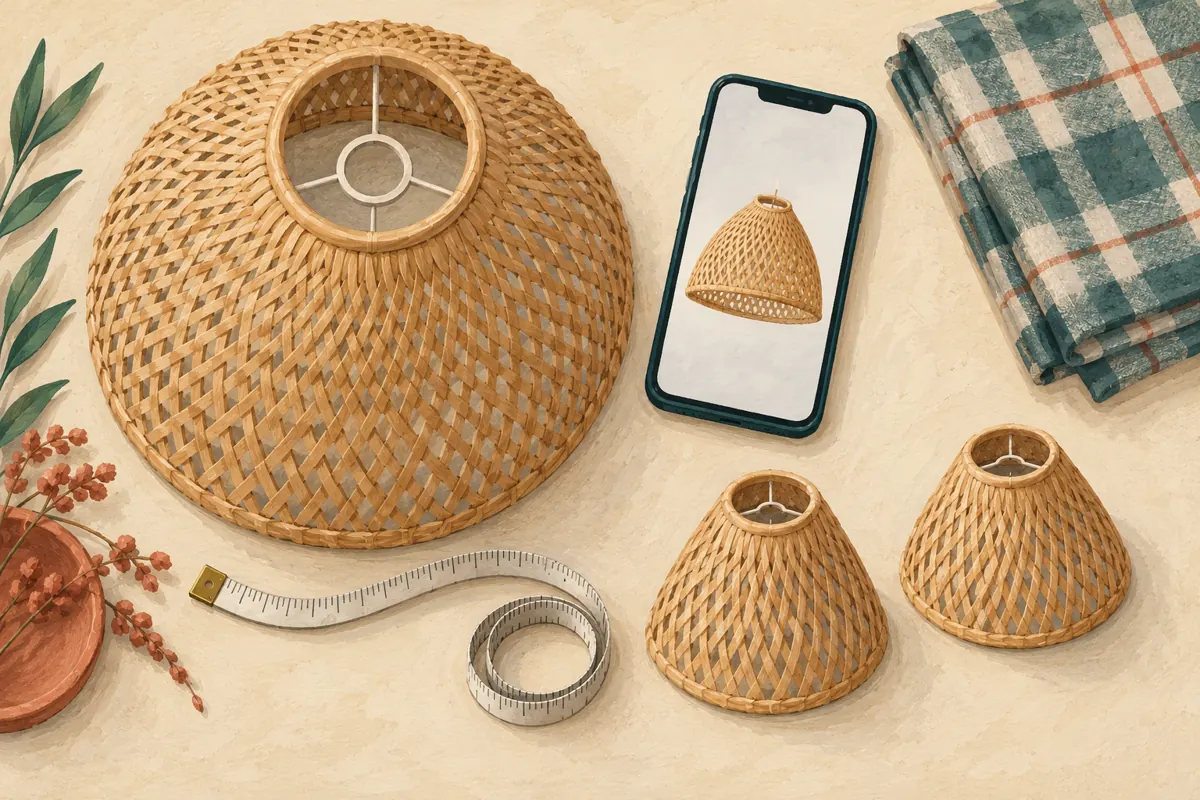
Request enough information to choose the next action: the product reference or image, required quantity, relevant size and whether the customer wants collection or delivery. For a size question, ask which dimension they mean. The widest rim, overall height and mounting opening describe different parts of a shade. A single unexplained measurement can send the conversation toward the wrong product.
Keep the first request short. A buyer comparing designs should not have to supply a full delivery address before learning whether the shop carries a suitable shape. Ask for a town or district if it is needed to discuss delivery feasibility, then collect more specific details when appropriate. Offer to clarify dimensions with a shop photograph rather than asking customers to dismantle a fitting. Product selection and electrical installation are separate tasks; a photo alone should not become an unsupported compatibility promise.

5. Turn the first reply into a useful decision
Use a consistent response sequence: identify the requested item, confirm what is known and ask for the single missing detail that determines the next step. In a hypothetical conversation, a buyer asks for “three like the photo, but smaller.” A useful reply identifies the pictured reference and asks whether smaller means less height or a narrower rim. Sending an entire catalogue immediately may create more uncertainty.
After clarification, state whether the shop can provide a stock answer, needs to inspect a sample or must prepare a custom quotation. Keep uncertain facts explicit. “We will check whether three matching pieces are available” means something different from “Three pieces are reserved.” When replying in Khmer or English, preserve the product code and measurement unit consistently. If staff translate a question for one another, repeat the interpreted requirement back to the buyer before using it to prepare a quote.
6. Assign responsibility without treating every reply as confirmation
Decide which staff member answers new conversations during each working period and who can approve stock, custom work and delivery arrangements. Use a small internal record with the product reference, unresolved question, responsible person and next action. These are proposed working habits, not claims that Telegram automatically supplies a sales pipeline. A shared notebook or existing business record can serve the purpose.
Define a confirmation boundary that every responder understands. Acknowledging a message is not accepting an order. Giving an estimate is not reserving stock. Before recording a confirmed sale, follow the shop’s established process for agreeing the item, quantity, price and collection or delivery terms. If a colleague takes over, they should read the unresolved question before replying. Otherwise, the buyer may receive a second greeting while still waiting for the mounting-size answer that matters.
7. Make the SMM panel decision separately
An SMM panel service cannot repair an unclear enquiry route. First decide what you need: easier customer contact, better product explanation or a particular catalogue service. The supplied public catalogue includes “Telegram Channel/Group Members ~ Max 1M ~ 100k/days ~ Instant ~ 𝐍𝐎 𝗥𝗘𝗙𝗜𝗟𝗟”. Its name indicates a channel/group member service; the supplied description is empty. The quantity, speed and refill wording in that title should be treated as catalogue claims, not independently verified performance.
Nothing in the supplied description establishes Cambodian audience origin, genuine purchasing interest or enquiry handling. If you consider that listing, verify the current terms, permitted use, required target and relevance to your objective before proceeding. Do not provide a private customer conversation as the service target. Purchased engagement is not evidence of genuine interest, sales, ad delivery or Cambodian users. If your immediate problem is unanswered size questions, improving staff coverage is a more directly relevant action than increasing a displayed audience count.
8. Test one complete enquiry before wider promotion
Run a rehearsal using a fictional request, clearly marked as a test for staff. Start at the public product post and follow the advertised contact route. Ask about a specific shade, leave one useful detail out and see whether the responder asks the right follow-up question. Complete the exercise when the visitor understands the next action, not merely when the first message receives a reply.
For example, a hypothetical Battambang customer wants matching shades for a small café but has not specified quantity. The responder should identify the design and request the quantity before suggesting availability. During the rehearsal, also check whether the public post promises delivery beyond the area the shop actually serves. Correct the post, staff instructions or contact setting wherever the journey breaks. Only then reuse the invitation in other promotional content. Keep the test conversation out of reports about genuine customer demand.
9. Review questions and outcomes as different evidence
After a promotion, review what people asked and what happened next. Useful categories include missing dimensions, unclear inclusions, unavailable designs, delivery questions and enquiries awaiting a shop response. A recurring question about whether the cable is included suggests a product-description problem. Several unresolved stock checks suggest an internal information problem. Each finding points toward a concrete improvement without requiring a claim that promotion caused a sale.
Keep any panel order reference and reported delivery in a separate record from customer enquiries and confirmed orders. If a buyer says they found the shop through a particular post, record that as their stated source. If the source is unknown, leave it unknown. Do not assign every new conversation to the most recent service purchase. Likewise, a larger channel audience does not establish that more local buyers saw the offer. Evaluate the enquiry workflow through the clarity and resolution of actual conversations.
10. Fix the mistakes that create unnecessary back-and-forth
One common mistake is advertising several competing contact routes without explaining their purpose. Another is asking for all customer details immediately, before understanding the product question. A third is letting staff answer from memory when an older photograph shows a discontinued design. These problems are best addressed with a consistent invitation, a short initial information request and a current product reference sheet.
Avoid presenting channel messaging as an instant quotation service unless the shop can support that promise. State realistic response expectations in ordinary language and review them when staffing changes. Do not publish screenshots of enquiries as customer proof without appropriate permission, or reuse private room photographs as promotional material merely because they arrived in a chat. Finally, revisit the route whenever you change the channel settings or shop contact process. A working invitation is part of the product information, and it deserves the same care as a correct size.

Frequently asked questions
Should every product question move into a private conversation?
No. Publish information that helps everyone, such as confirmed dimensions and what the product includes. Use a private conversation for an individual quantity, delivery requirement or selection question. If the same question keeps arriving, improve the public post so future visitors can answer it themselves.
What if the buyer sends only a photograph?
Identify the design if possible and ask what they need to know about it. Do not assume the photograph is a request to buy. If several items appear, ask the buyer to identify the relevant shade before discussing size, availability or price.
Does a channel member service bring Cambodian customers into the inbox?
The supplied service information does not establish that outcome. A member service title is not evidence of local audience origin or buying intent. Evaluate genuine enquiries through their content and your order process, and avoid presenting purchased membership as proof of Cambodian customer demand.
What should the shop do when nobody can answer promptly?
Adjust the public response expectation and assign a person to clear the outstanding conversations. Prioritise questions blocking an existing quotation or collection arrangement. If the shop cannot monitor the advertised route reliably, revise the invitation to a contact method it can actually support.
Can a channel message count as an order?
It can begin an order discussion, but the shop needs a clear acceptance process. Confirm the exact item, quantity, agreed price and fulfilment terms through the established workflow. A message asking whether a shade is available should remain an enquiry until those requirements are resolved.
Explore the current service catalogue, create an account, or ask a specific question through support tickets.
Prepared with AI assistance. Illustrations explain the workflow and do not represent customer results.