21/10/2026 17:31
Can Families Forward the Sample? Telegram Content Protection for Cambodian Invitation Printers

A wedding invitation sample often needs to travel beyond the person who first discovers it. A couple may want a parent to compare borders, a sibling to check the wording, or a planner to review the envelope. For a Cambodian invitation printer promoting work through Telegram, that sharing journey deserves deliberate preparation. Customer proofs, however, can contain names, telephone numbers and ceremony details that have no place in a public catalogue. This guide explains how to decide which material should travel, check Telegram’s content-saving restriction, and prepare a useful promotional destination before considering any SMM panel service.
1. Start with the decision the family needs to make
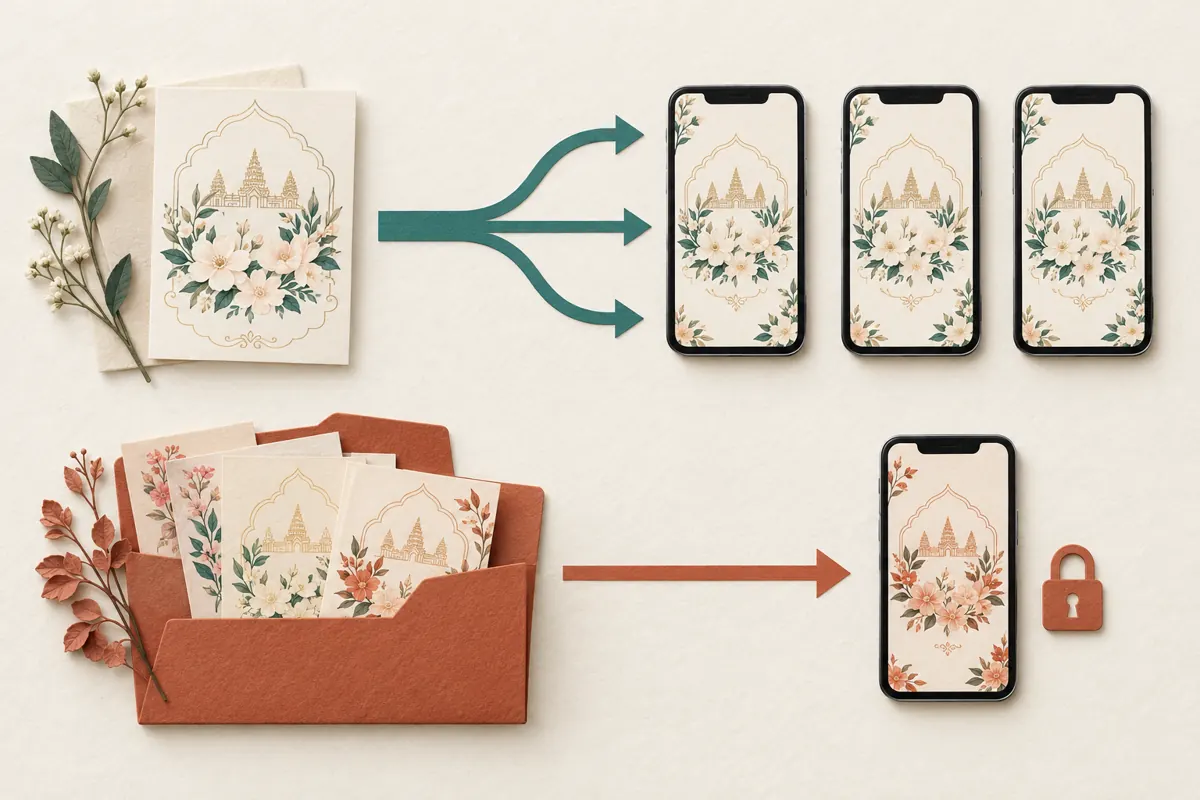
Consider a hypothetical Phnom Penh print shop preparing a campaign for floral wedding invitations. Its owner wants prospective customers to compare a folded card with a flat card. The useful next action is for someone to show the options to a family member and return with a sample reference. Merely opening the channel does not complete that task. The promotional post should therefore make the comparison understandable when encountered outside the original browsing session.
Write the intended journey in one sentence: discover the sample, discuss the format, then contact the shop with the chosen reference. Decide which parts require sharing and which require a private conversation. Paper texture, envelope shape and available layouts can belong in the public sample. Personal wording, guest information and approval notes belong in the individual order process. This distinction gives the channel’s sharing settings a business purpose instead of making them an unexplained technical preference.
2. Understand what the Telegram restriction changes
Telegram documents a group and channel setting called Restrict Saving Content. It restricts forwarding, prevents screenshots and limits saving media. Its published navigation is Group or Channel Info, then Group or Channel Type, then Restrict Saving Content. Check the controls available in the app you actually use. These are documented platform capabilities, not a promise that information can never leave a recipient’s hands. See Telegram’s [Protected Content guidance](https://telegram.org/blog/protected-content-delete-by-date-and-more).
Treat this as a channel-level editorial decision. A catalogue designed for family discussion has a different purpose from a space used for controlled review. Before changing anything, inspect what is already there and identify who owns the decision. Do not loosen a restriction simply because one promotional image would be easier to distribute. First establish whether other material in that space was shared with an expectation of limited circulation. When the purposes conflict, separating the material is usually the clearer operational choice.
3. Sort samples, proofs and production files
Create three working categories. Promotional samples show what the shop offers and are deliberately prepared for public viewing. Customer proofs show a particular person’s proposed order and require that customer’s review. Production files contain the material needed to manufacture the approved job. These categories describe intended use; a beautiful image does not automatically become promotional material because it would look good in a campaign.
In the hypothetical shop, a photograph of a blank floral card belongs in the sample collection. A version containing a couple’s names and ceremony address belongs in their proof conversation. The editable layout belongs with the production team. Keep unrelated customers out of each other’s review spaces. Before photographing the sample, inspect the background for order slips, delivery labels and other proofs. A careful foreground crop can still leave personal information visible on the workbench. Preparing an anonymous demonstration from the start is often easier than repairing a photograph afterward.
4. Make a public sample useful when it travels
Give each promotional design a simple reference that staff can recognise. In a hypothetical catalogue, “Lotus Fold A” could identify one layout without exposing a customer’s order number. Explain whether the image shows a card alone or a matching envelope set. State which elements are illustrative and which choices require a quotation. Avoid displaying a decorative sample as though every paper, finish and accessory shown is automatically included.
Write the accompanying explanation in the language your customers use, with Khmer wording reviewed by someone who understands the printing terms. Keep any necessary English paper or product names consistent. Include a clear contact route and ask customers to mention the sample reference. If photographs may circulate separately from their captions, a discreet shop identifier and reference can help preserve context. Keep them away from details customers need to inspect. The goal is an understandable sample, not a large promotional overlay that hides the border or fold.
5. Run a customer-view test before promotion
Ask a consenting colleague to review the intended destination through an ordinary viewer account, without administrator privileges. Use an anonymous sample for the test. Have the colleague open the channel through the exact link you plan to distribute, locate the sample and attempt the sharing action your campaign expects. Record what happened rather than assuming the owner’s view matches the visitor’s experience.
Then inspect the received material together. Can the second person identify the design, understand what is included and find the shop’s contact route? If the sample cannot travel as intended, return to the publishing decision before buying promotion or distributing the link more widely. Do not improvise a workaround around a deliberately protected proof space. Also test the practical reading experience: a family member may recognise the floral design but miss that the pictured envelope is optional. That misunderstanding needs a clearer sample or explanation, even when the technical sharing test succeeds.
6. Resolve mixed-purpose channels carefully
Some shops already have a channel containing both generic examples and personalised work. Pause promotion while reviewing that mixture. Identify which posts were approved for public use, which need a new anonymous version and which belong outside the promotional catalogue. Ask the person responsible for customer communication when permission is unclear. A customer approving an invitation for printing has not necessarily approved its use in an advertisement.
Prepare the public collection from approved source material, then test its destination independently. Keep the restricted review process available for its original purpose. If a customer needs to consult relatives, agree on an appropriate review copy and who should receive it; do not assume the public sample answers every proofing need. Assign one staff member to maintain the promotional collection so that a busy colleague does not later add an identifiable proof simply because it demonstrates a popular finish. A short written publishing rule makes this separation easier to maintain.
7. Evaluate the SMM service against the actual task
One public catalogue entry supplied for bine.digital is “Telegram Members ~ 60 Days Non Drop ~ 30k/Days ~ Instant ~ 𝗥𝗘𝗙𝗜𝗟𝗟 60D”. Its name and category identify a Telegram member service. No supporting description was supplied, so the speed, retention and refill wording should be treated as catalogue claims requiring clarification, not verified outcomes. The title does not establish Cambodian audience origin, customer intent or official Telegram affiliation.
Ask whether a member service addresses the problem you actually found. It cannot repair an unclear sample, decide whether a proof may be shared, or establish that a family understood the offer. Purchased membership or engagement is not evidence of genuine interest, sales, ad delivery or Cambodian users. If assessing a panel service, review applicable platform rules and request clear current terms before committing. Keep private proof spaces outside the promotional target list. Where the immediate problem is a blocked or confusing customer journey, fixing that journey is the useful next action.
8. Measure enquiries separately from distribution
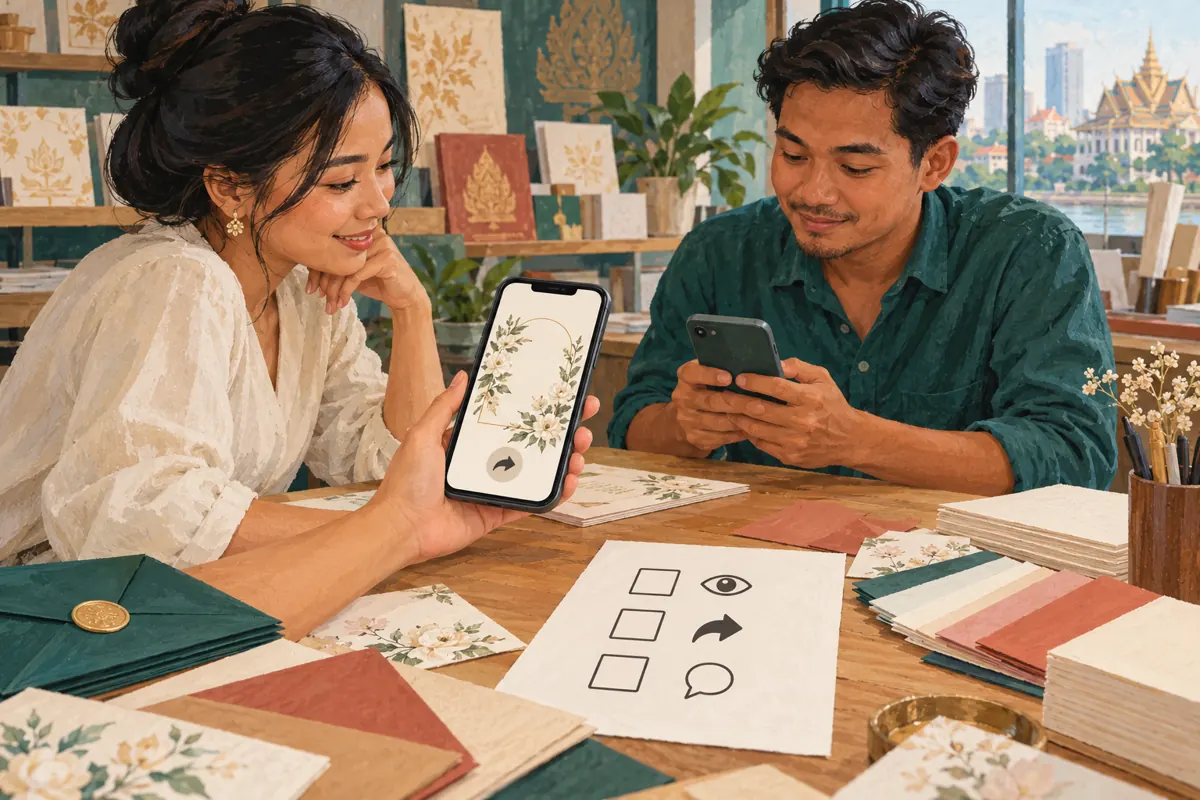
Keep three distinct records: what the team published, any panel order and its reported delivery, and actual customer enquiries. For enquiries, note the sample reference, the question asked and the next agreed action. Collect only the information needed for the job. This makes it possible to distinguish someone requesting paper options from someone approving a design or confirming a print order.
Telegram explains that channel post views include forwarded copies and that its counters are approximate. A view total therefore should not be described as a count of unique prospective customers. See the [Telegram Channels FAQ](https://telegram.org/faq_channels). For the hypothetical shop, a message asking whether Lotus Fold A supports bilingual wording is useful qualitative feedback. It still is not a sale. Review recurring questions to improve the sample explanation, and report orders only from the shop’s actual order records. Do not attribute every later enquiry to a panel purchase merely because it happened afterward.
9. Avoid shortcuts that create new confusion
A common mistake is telling customers to share a sample without testing whether the intended route works. Another is changing a whole channel’s settings to solve one post’s problem before reviewing older material. Both mistakes begin with treating publication as a single image upload instead of a continuing responsibility for everything the destination contains.
Other shortcuts concern the creative itself. Covering names with decorative stickers can leave an address, date or telephone number elsewhere in the image. Reusing a finished customer invitation can imply endorsement that was never given. Sending an unexplained image to a prospective buyer can leave them unable to identify the design later. Prepare a dedicated sample, inspect the entire frame and give it a stable reference. Finally, avoid using membership growth as reassurance that the workflow is working. A larger displayed audience cannot tell you whether a relative could compare the formats or whether the enquiry reached the right staff member.
10. Give the team a clear release decision
Before releasing the campaign, ask the reviewer to make one of three decisions: ready for public sharing, needs an anonymous replacement, or reserved for customer review. Record the reason in plain language. For example, the hypothetical Lotus Fold A photograph might be ready because it contains no customer information, shows the included components clearly and passed the customer-view test. A personalised version might remain reserved because it contains ceremony details.
Save the approved public link, sample reference and review date with the campaign notes. If a panel order is later considered, use those notes to verify the proposed destination without copying private customer material into support tickets. Recheck the sample when paper availability, included accessories or contact arrangements change. Staff should be able to explain what a viewer will see and what the viewer can do next. That practical clarity is the foundation for promotion, regardless of whether the shop uses a panel.
Frequently asked questions
Should our invitation catalogue allow customers to share samples?
If family consultation is part of your intended buying process, prepare material specifically for that purpose. Use anonymous examples and test the sharing journey. If the existing space contains customer proofs, review and separate that material before changing its settings. The decision should follow the content’s intended use.
Does content protection make a personalised proof completely confidential?
No setting should be treated as an absolute confidentiality guarantee. A recipient still sees the information and could communicate it elsewhere, including by photographing a screen with another device. Limit what you send, choose recipients carefully and keep unrelated customer details out of the proof.
What if a customer needs relatives to approve the wording?
Agree on who should review the proof and provide an appropriate review copy through the agreed route. Make clear which version is current and who can give final approval. A generic promotional sample helps compare appearance, but it cannot replace checking the customer’s actual names and wording.
Can a Telegram member service prove that local couples saw our designs?
No. A member-service record does not establish location, attention or purchase intent. Use actual enquiries to understand what people ask about, and use confirmed business records to report orders. Avoid presenting purchased membership as evidence of local popularity or customer approval.
What should we do when the sample looks clear but enquiries remain confused?
Review the questions rather than immediately increasing promotion. Customers may be unsure about envelopes, paper choices, printing on both sides or how to request a quote. Revise the relevant explanation, ask a colleague to read it as a new customer and repeat the journey test.
Explore the current service catalogue, create an account, or ask a specific question through support tickets.
Prepared with AI assistance. Illustrations explain the workflow and do not represent customer results.